The Shift Back to Local-First Development
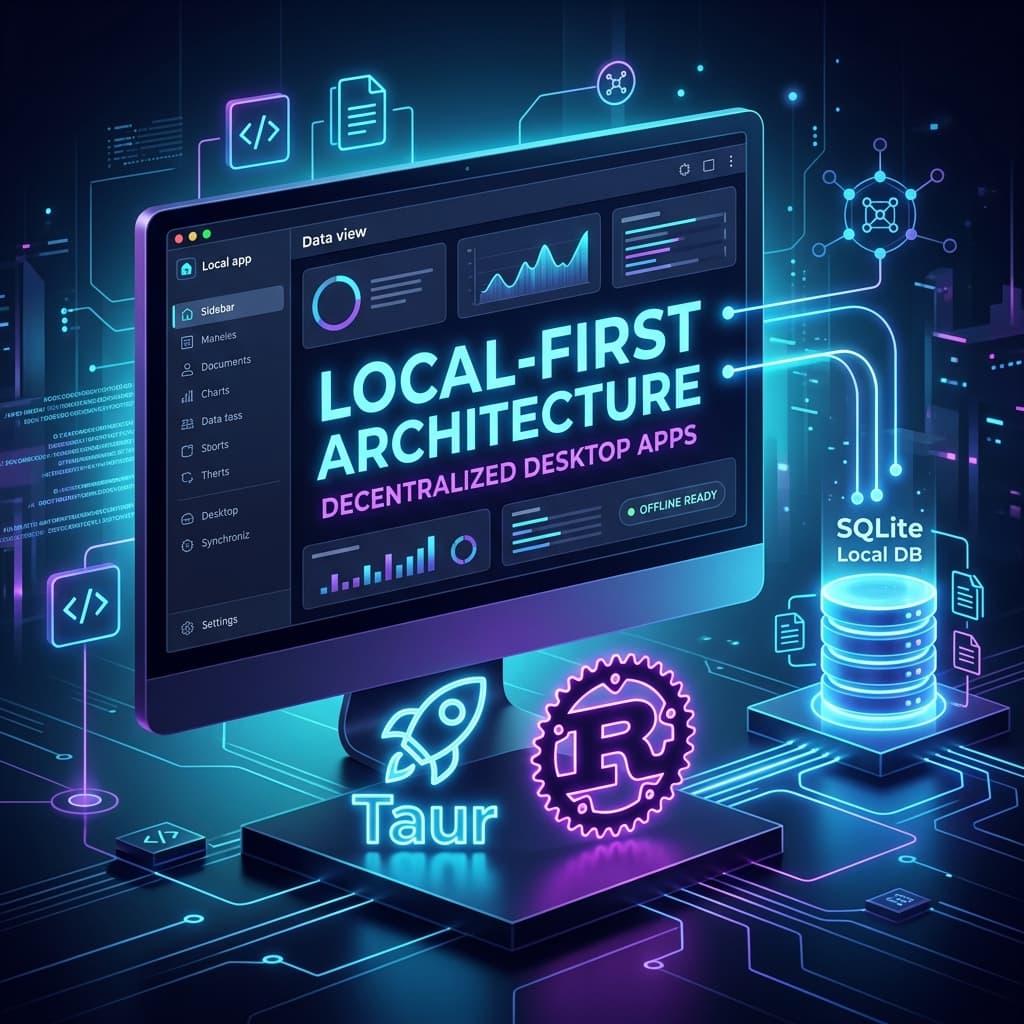
For the past decade, cloud-only software-as-a-service (SaaS) applications have dominated the industry. However, as internet connectivity issues persist globally and server costs continue to rise, a new paradigm is gaining massive traction: local-first software. Local-first applications store data locally on the user's device while syncing to the cloud in the background. This ensures instant performance, offline-by-default functionality, and absolute privacy.
Why Tauri is Winning the Desktop App War in 2026
Historically, building desktop applications meant using Electron, which bundles a full Chromium browser and Node.js runtime—resulting in massive bundle sizes and high memory usage. In 2026, Tauri (specifically Tauri v2) has emerged as the premier choice. By using Rust for the backend and relying on the operating system's native webview for the frontend, Tauri produces applications that are:
- Incredibly Lightweight: Bundle sizes are often under 10MB, compared to Electron's 100MB+.
- Extremely Secure: Rust’s compile-time safety and Tauri’s strict isolation security model prevent common web exploits.
- Highly Performant: Memory consumption is a fraction of what traditional frameworks require.
SQLite: The Ideal Companion for Local Storage
A local-first application needs a robust database. SQLite is an in-process library that implements a self-contained, serverless, zero-configuration, transactional SQL database engine. In 2026, with tools like SQLite's native WASM builds and robust local drivers, developers can handle complex relational queries directly on the client machine with sub-millisecond execution times.
Real-World Implementation: Miraq LABS Local POS
At Miraq Labs, we applied these exact architectural principles when designing the Miraq LABS Local POS System. By combining Tauri, Next.js, and SQLite, we created a desktop-native Point of Sale system that can run uninterrupted for weeks without an internet connection, processing thousands of transactions and syncing with the cloud only when connectivity is restored. This architecture provides retail merchants with the reliability they need to run their daily operations without fear of network downtime.